GordeyYastrebov
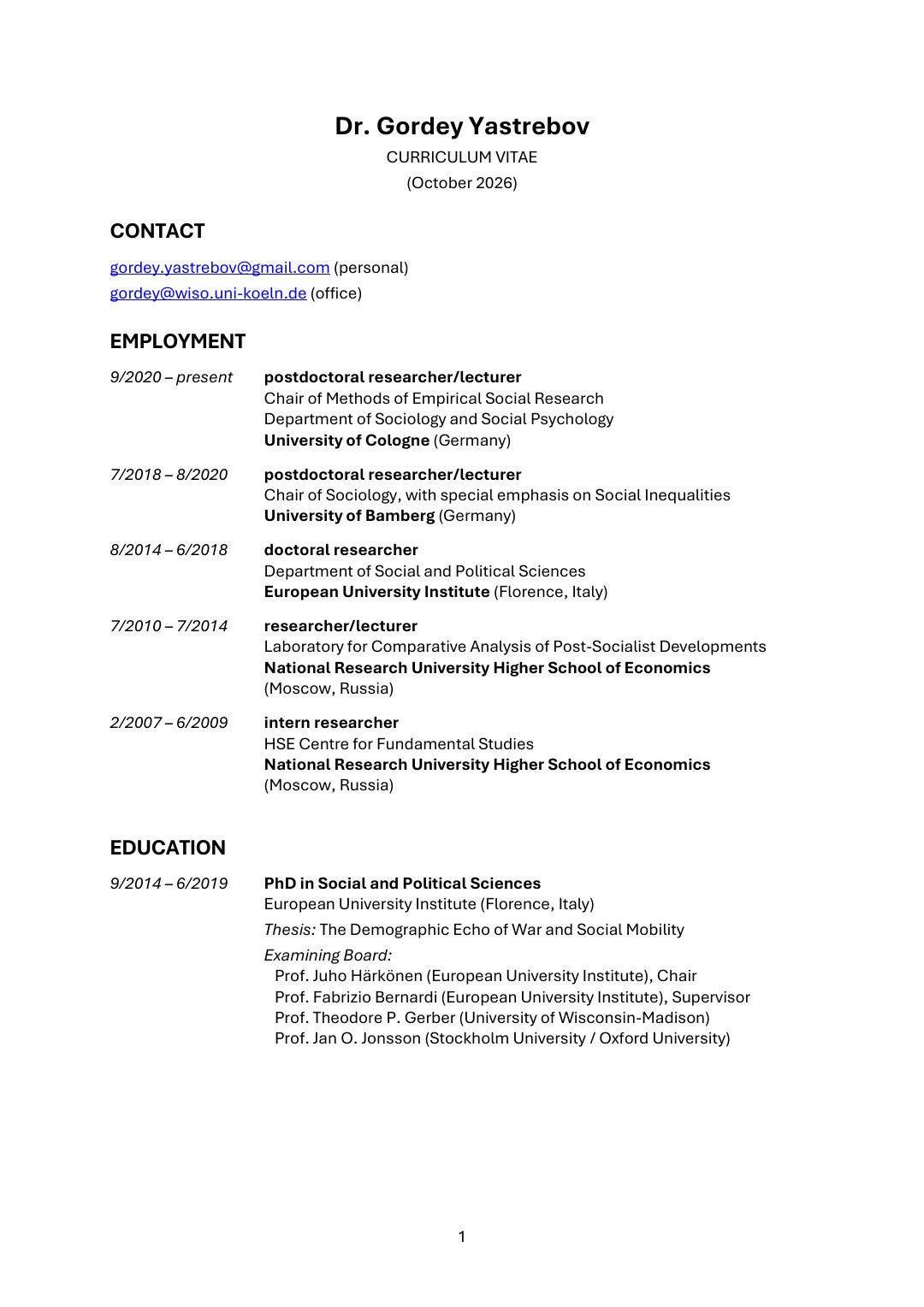
I'm a quantitative social scientist and postdoctoral researcher at the University of Cologne, with an academic background in economics and sociology.
My research examines social inequality and mobility in relation to demographic change, from Soviet and post-Soviet Russia to educational inequality across Europe and intergenerational reproduction. I'm also equally passionate about statistical modelling and inference, including developing methods and analytical tools.
My teaching spans quantitative research methods, applied data analysis, and substantive courses on social stratification, educational inequality, and family demography.
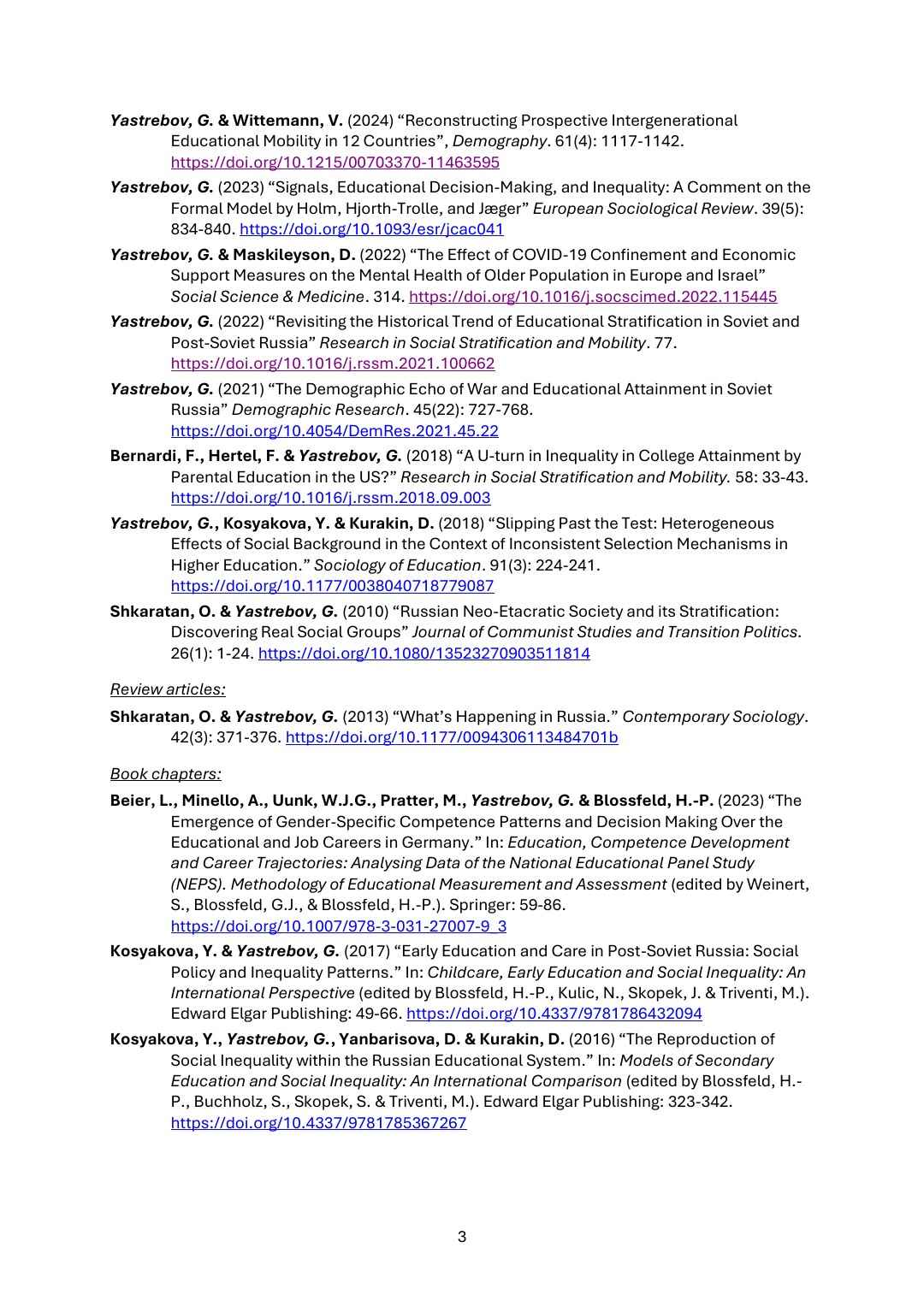
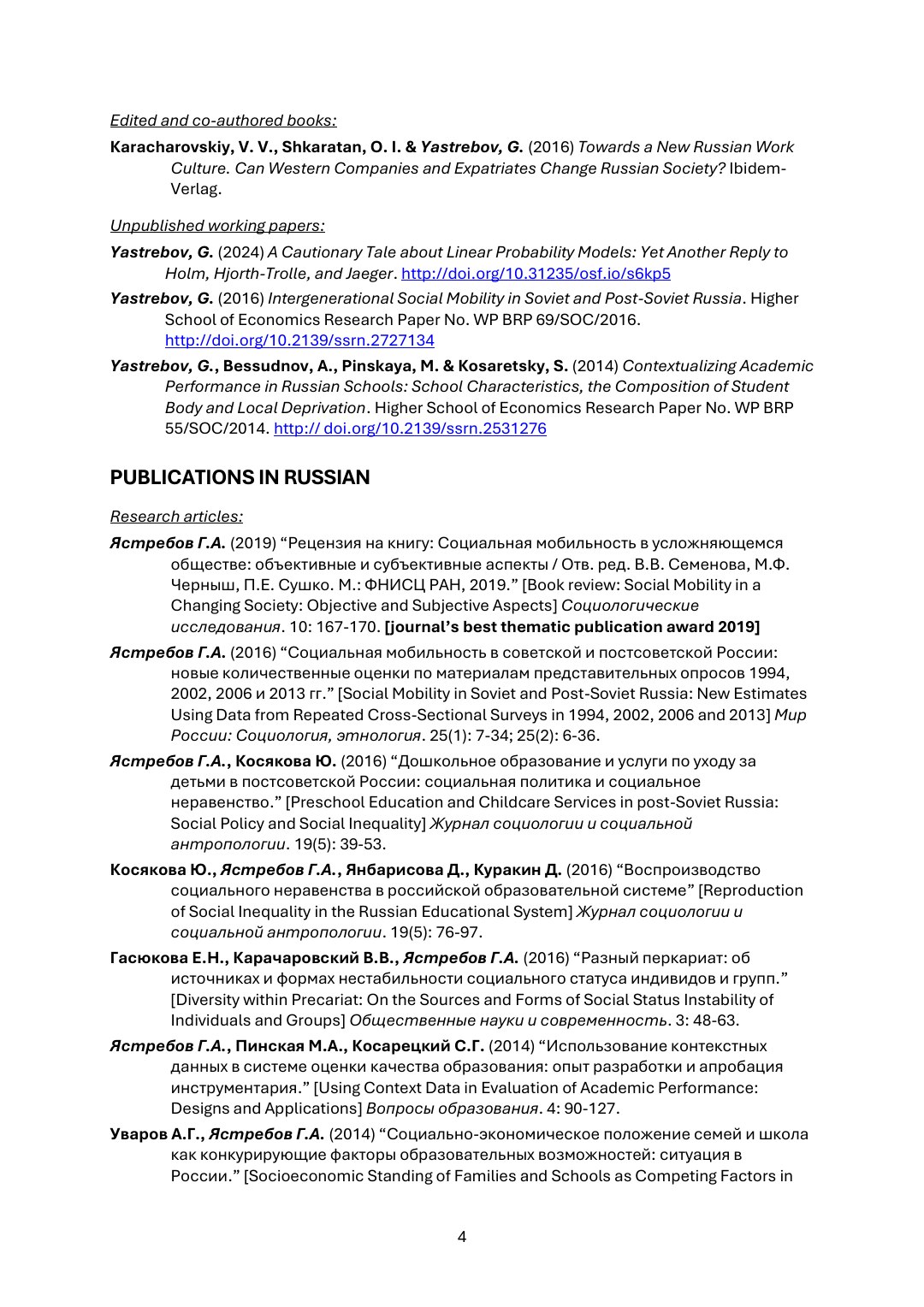
For additional publications, including book chapters and Russian-language work, see .
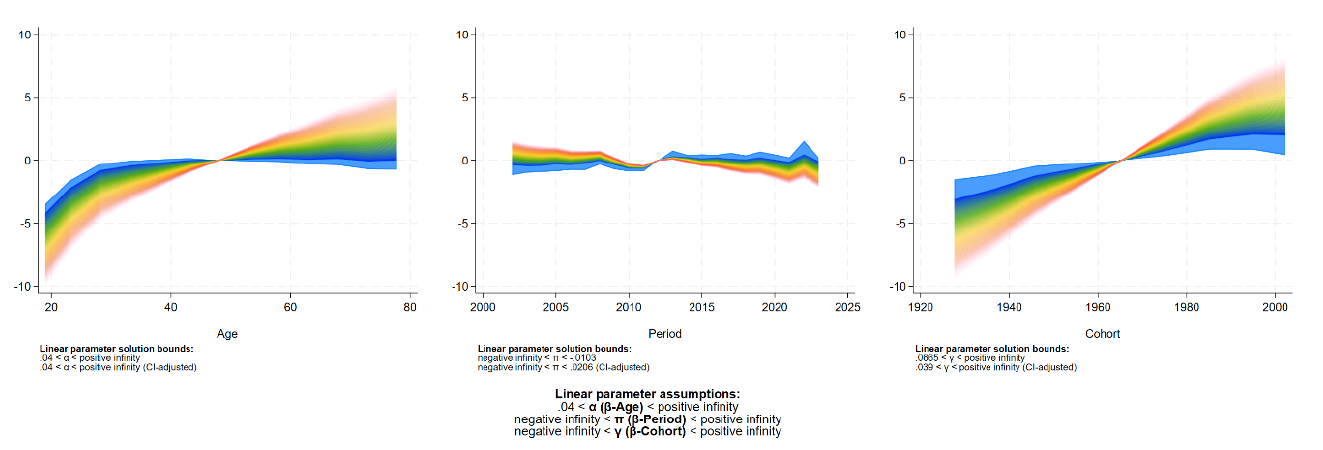
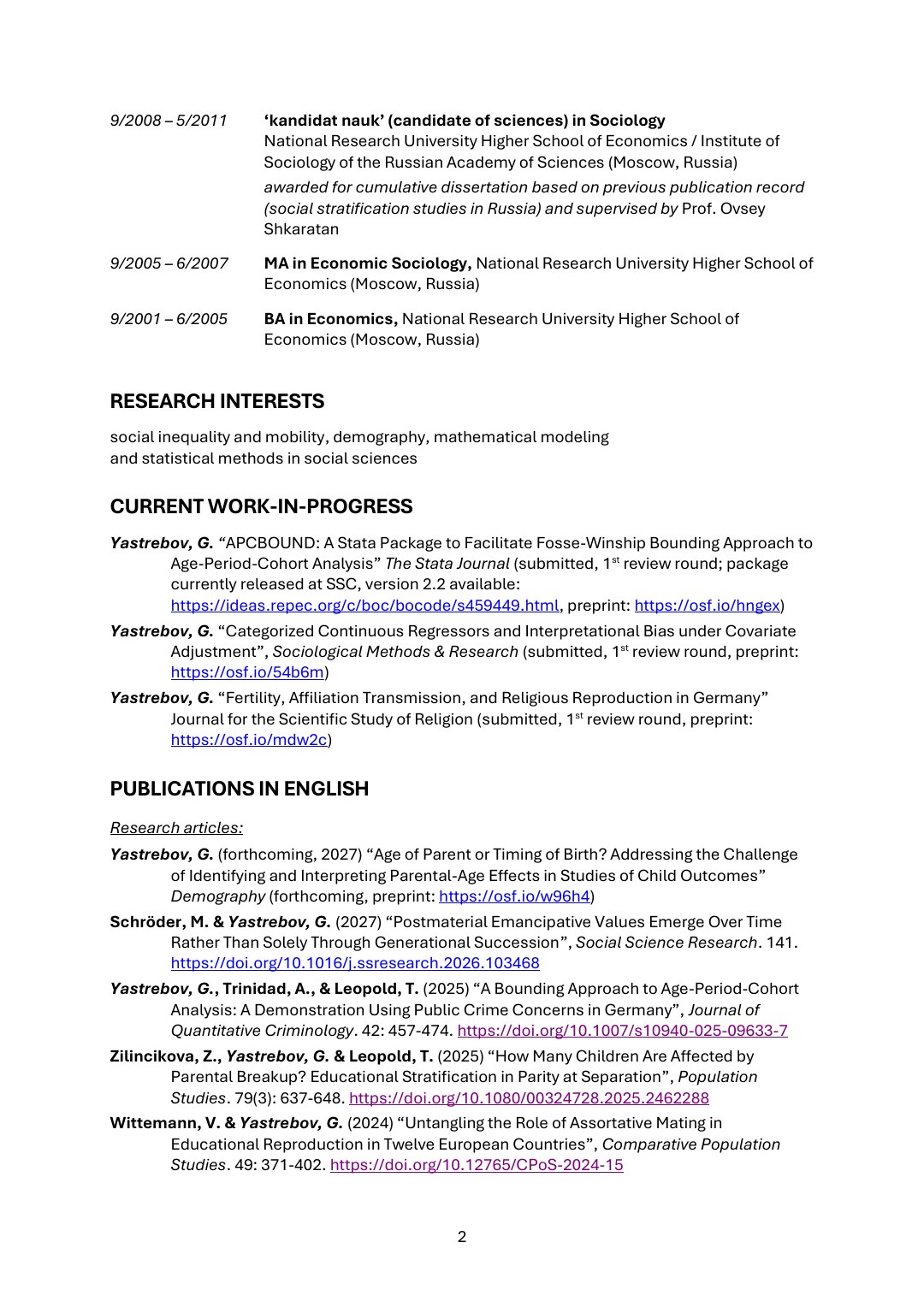
APCBOUND provides an integrated Stata workflow for the Fosse–Winship bounding approach to age–period–cohort analysis. It combines descriptive plots, estimation of identified components, exploration of alternative APC decompositions, and calculation and visualization of bounded and semi-bounded solutions. Researchers can examine how substantive restrictions constrain the linear effects that the data alone cannot identify.
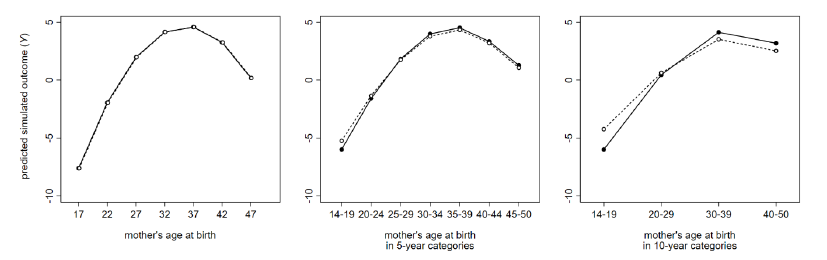
When continuous predictors are grouped into categories, adding controls can change the underlying contrasts represented by the same category labels. Coefficient changes may consequently be mistaken for evidence of confounding or mediation. This project formalizes this problem, illustrates it with simulations and maternal-age data, and provides a practical diagnostic.
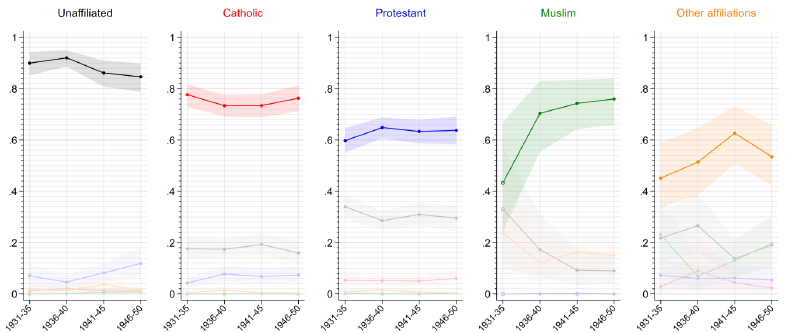
Can higher fertility compensate for religious groups losing members between generations? Combining fertility data with evidence on adult children’s affiliations, this project reconstructs religious reproduction in Germany for women born in 1931–1950, including childless women. Under the assumptions linking these sources, Catholic fertility partly offsets affiliation losses, Protestant fertility offers little compensation, and lower fertility limits but does not prevent unaffiliated gains.